Why Google Killed Exact & Phrase Match in Google Ads
When I began using Google Ads, Exact Match and Phrase Match gave advertisers clear control over searches that could trigger an ad. Although these labels stay, their meanings have changed. Google now permits additional variations through intent, context, and machine learning.
What You Should Know about Google Ads Match Type Changes
This change helps explain Why Google Killed Exact Match and Phrase Match Keyword Modifiers In Google Ads. Google expanded close-variant matching and moved beyond strict word order and spelling rules in many cases. Consequently, a keyword can help to reach searches that seem related but differ substantially from the advertiser’s original wording.
This article examines how these adjustments affect budget control, ad relevance, search-term reviews, and campaign management. It also explains why modern Google Ads campaigns rely additional on negative keywords, conversion data, and automated bidding.
Key Original Purpose Of Exact Match, Phrase Match, And Keyword Modifiers
When I used Exact Match in Google Ads, I might limit an ad to one specific search. A keyword such as running shoes was designed to trigger that search, without extra words before, after, or between its terms. That structure protected budget and kept the ad closely aligned with buyer intent.
Phrase Match offered broader reach while preserving the phrase’s word order in real-world use. A keyword for “running shoes” might match searches such as “buy running shoes” or “running shoes for women.” This approach was not designed to match “shoes for running” or “running sneakers.”
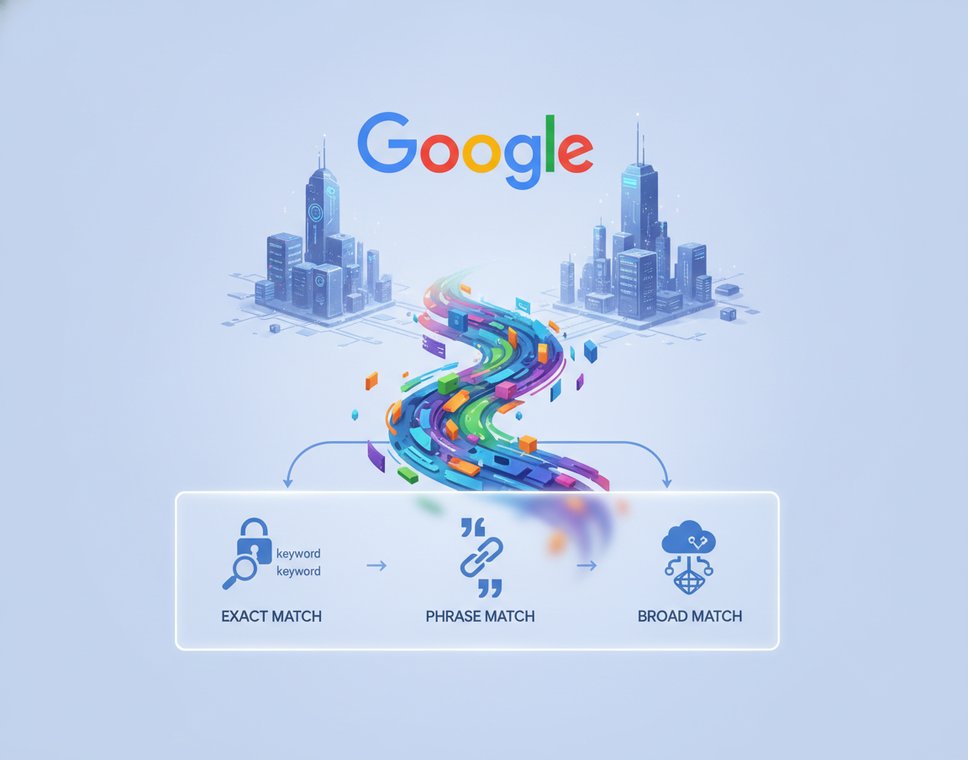 Google Ads Match Type Changes
Keyword Modifiers gave advertisers another level of control in many cases. This broad match modifier used plus signs before selected words. Each marked word had to appear in the search, although the words could appear in any order. That approach helped me balance reach with precision.
- Exact Match focused on strict query control in real-world use.
- Phrase Match allowed added words around a set phrase in real-world use.
- Keyword Modifiers required selected terms in any order in practice.
These match types shaped how I managed PPC traffic. Restrictive matching helped control spend, protect commercial intent, and improve ad relevance. WordStream reported that classic Phrase Match and Exact Match often improved return on investment by low double-digit percentages when guiding traffic.
This tradeoff was account complexity. An account with 10 million keywords might include about 1 million core keywords and 9 million variations. Each variation might require new ads, ad groups, bids, and search term reviews. That structure gave advertisers control, but demanded careful planning and frequent maintenance.
Why Google Killed Exact Match And Phrase Match Keyword Modifiers In Google Ads: A Practical Guide
I see this change as part of Google’s move from fixed keyword rules toward broader intent signals in real-world use. Exact and phrase match still appear in Google Ads, once known as Google AdWords, but their meanings are less strict in practice. Google now weighs the likely purpose of a search, rather than only the words entered into the search box in many cases.
Google’S Expansion Of Close Variant Matching: A Practical Guide
Google introduced close variant matching in 2012 in many cases. At initial, it covered misspellings, singular and plural forms, stemmed words, accents, abbreviations, and acronyms. Advertisers could exclude close variants from exact and phrase match campaigns.
Google removed that choice over time in many cases. Campaign labels remained, but the rules behind them changed in real-world use. An exact match keyword might reach searches that Google considered equivalent in meaning. Phrase match gained similar flexibility through later Google algorithm updates in practice.
The Retirement Of Broad Match Modifier
Google retired the broad match modifier in 2021 in practice. Its valuable features became part of phrase match, changing word order and query structure. Phrase match no longer required searches to preserve the same sequence of words in practice.
For example, the keyword digital marketing agency might match “marketing firms for online businesses” or “digital advertising agency.” These searches apply separate language, yet Google may connect them through shared intent. That gave advertisers wider reach with fewer keyword variations.
Google’S Shift Toward Automation And Intent Matching Explained
Google’s wider system now relies on machine learning, Smart Bidding, broad match, Performance Max, and keywordless targeting in practice. Google Shopping ads do not use keywords for targeting. Organic systems such as Hummingbird can help to rank page copy without exact search terms.
I view these match type changes as part of the same direction. Google may find long-tail searches and related intent faster than advertisers can list every variation. Broader matching may produce more impressions, clicks, auctions, and budget use. Strict match types sometimes left daily budgets unspent when few searches met exact wording rules in practice.
Google has reduced additional detailed controls, including Device Targeting. This produces simpler account structures and gives automated systems additional influence over delivery. Campaigns can help to enter more auctions and increase Google’s advertising revenue, which explains why some advertisers remain cautious about these Google algorithm updates.
How Exact And Phrase Match Changes Affect PPC Advertising Performance
Modern match types give advertisers less control over searches that activate ads in many cases. Exact and phrase match may cover misspellings, synonyms, paraphrases, reordered words, and searches with added or removed function words. I now treat each keyword as an intent signal rather than a strict search rule in real-world use.
Reduced Control Over Search Queries: A Practical Guide
A service keyword can help to reach a search with a very separate purpose. For example, a plumbing services keyword may trigger “how to become a plumber” or “plumbing apprenticeship program.” These users might seek training or career advice rather than a plumbing company.
The same problem may affect additional industries. A cosmetic dentist keyword may match searches for dental jobs, a free NHS dentist, or how to become a cosmetic dentist. Similar words do not prove similar buying intent, making Search advertising harder to control in real-world use.
More Wasted Spend And Lower Relevance
Loosely related searches can help to lower click-through rates and conversion rates. They might send users to landing pages that do not fit their needs. Someone seeking free care, employment, or education is unlikely to respond to a sales offer in practice.
When these clicks continue, return on ad spend may fall, while expense per acquisition can rise. Poor query alignment can weaken ad relevance and Quality Score. In my view, this is one of the clearest risks in modern PPC advertising in practice.
Greater Dependence On Negative Keywords
Negative keywords now carry more of the control once provided by strict match types. I review search term reports regularly and add irrelevant phrases to shared or campaign-level lists in many cases.
That process has limits. Google withholds some matched terms when they fail to meet an unspecified privacy threshold in practice. Advertisers cannot audit every impression or click, even as matching expands in real-world use. Search advertising requires closer monitoring, careful exclusions, and realistic expectations approximately available data.
Main Benefits Google Gains From Redefining Match Types
Strict exact match and phrase match was able to leave part of an advertiser’s daily budget unused. Only a narrow set of searches met the old rules in many cases. Broader matching gives Google Ads additional chances to enter auctions, demonstrate ads, earn clicks, and use the available budget.
Across millions of accounts, small gains in matched traffic can help to produce substantial revenue growth. Each additional impression or click increases Google’s advertising income. This model supports Google’s goal of keeping additional searches within its ad marketplace.
Google presents this change as a shift toward machine learning and stronger intent signals in many cases. Close variants may cover misspellings, grammar updates, acronyms, and related wording. They can help to reach long-tail searches that I was able to not list individually in a PPC account.
Fewer keywords may make an account easier to manage. I may spend less time building extensive keyword lists and greater time testing ad copy or landing pages. A smaller structure can help to strengthen cleaner experiments and faster updates.
- More eligible auctions for Google Ads campaigns in many cases
- More impressions and clicks across search outcomes
- Broader reach for long-tail queries in many cases
- Fewer keyword variations to build and maintain in many cases
Large accounts show why this change matters. An account with 10 million keywords can contain about 9 million variations. That scale may slow review, testing, and budget decisions. Broader matching reduces part of that account burden in real-world use.
My goal in PPC differs from Google’s goal in real-world use. I need qualified organic visits, profitable conversions, and a effective return on ad spend. Google benefits when greater auctions, impressions, clicks, and spending occur. Redefined match types extend Google’s reach, but they can help to reduce my control over relevance and budget standard.
What Advertisers Lost When Google Consolidated Keyword Match Types
Classic Exact Match and Phrase Match once gave me a straightforward filter for entering an ad auction. They let me group related searches, set tighter rules, and protect a limited budget in practice. Google’s modern system gives greater weight to its interpretation of intent than to my chosen Keyword Modifiers.
That shift affects businesses with narrow services, local limits, or highly specific customer profiles. A search may seem applicable to Google but still fail to fit the offer, location, or sales process.
Key Loss Of Precision And Campaign-Level Control
Exact and Phrase Match no longer provide the same query control. Google can help to connect a keyword with searches that share inferred meaning, even when their wording, need, or buying stage differs.
I must now separate campaigns by intent with greater care in practice. One campaign can target urgent buyers, while another focuses on research terms. Without this structure, high-value and weak searches can compete for the same budget.
Small advertisers feel this loss most sharply. A large account may absorb several poor clicks. A local contractor or specialized medical practice might lack enough budget for that level of variation.
More Complex Optimization And Reporting Challenges Explained
Google algorithm updates have made search term review a regular task in many cases. I need to examine query reports, add negative keywords, and compare outcomes by location, device, audience, and conversion strength.
Search term data might omit queries that receive impressions or clicks. That gap makes wasted spend harder to trace. It can hide patterns that tighter Keyword Modifiers once made visible.
Ad and landing site alignment now requires close attention. When a triggered search does not match the message or webpage, click-through rates may fall. Quality Scores might decline, raising the price of holding a desired ad position.
Key Broader Reduction Of Advertiser Control In Google Ads
The change extends beyond keyword matching. Smart Campaigns, Performance Max, responsive search ads, and automated bidding move greater decisions into Google’s systems.
Performance Max can help to distribute budget across Search, YouTube, Display, Discover, Gmail, and Maps, with limited visibility into each placement. Responsive search ads can help to combine headlines and descriptions in ways I cannot choose for every auction.
Target CPA and Target ROAS can replace manual price-per-click choices. Google algorithm updates may improve automated bidding when conversion data is strong and volume is steady. I still need strict checks because the system can benefit platform signals over profit, service limits, or the full customer journey.
How I Recommend Adapting To Google’S Modern Match Type System
Google Ads now demands a tighter balance among control, reach, and review in many cases. Before launch, I separate proven revenue terms from discovery campaigns in many cases. That structure protects the budget and makes matching drift easier to identify.
Work With Exact Match For High Intent Control Groups
I reserve Exact Match for proven keywords with strong conversion rates and easy-to-follow commercial intent. Modern Exact Match still reaches close variants, so it no longer offers the precision it once offered. It generally offers greater control than Phrase Match or broad match.
I keep core revenue terms in separate campaigns in practice. This prevents valuable searches from competing with uncertain organic visits. Examples contain “digital marketing agency for law firms” and “Facebook ads management for chiropractors.”
Apply Phrase Match Selectively For Discovery
I treat Phrase Match as a limited discovery tool in real-world use. It can reveal niche searches and mid-funnel demand, but I do not apply it as my default targeting method.
For each test, I set a controlled budget and clear performance limits. Strong search terms can become dedicated Exact Match keywords after they produce helpful conversion data. This process turns discovery into a additional focused account structure.
Combine Broad Match With Smart Bidding Carefully
Broad match can help to perform well when an account has reliable conversion data. Smart Bidding can help to assess context, device signals, location, and past behavior to find users who can convert.
I favor longer, high-intent themes over vague one-word terms in real-world use. “Digital marketing agency for law firms” gives stronger direction than “marketing agency.” in many cases Broad match is not a set-it-and-forget-it option in real-world use. I review active campaign search terms at least once each week in practice.
Build A Consistent Search Term And Negative Keyword Process
I review search terms on a fixed schedule and record each useful pattern. I organize negative keywords by intent, geography, employment, education, free services, do-it-yourself searches, and competitor terms in real-world use.
- Remove searches that lack a straightforward commercial purpose.
- Block locations that the business does not serve in many cases.
- Exclude job seekers, students, and free-service requests in many cases.
- Track repeated mismatches before adding new negatives in practice.
Before launch, I document the intended audience and purpose of every keyword in real-world use. This record gives me a easy-to-follow reference when Google Ads expands a match. It helps me decide whether to adjust bids, add a negative keyword, or move a search into a stronger Exact Match group.
Why I Also Recommend Investing In Organic SEO Beyond Google Ads
PPC advertising supplies fast visibility, but each visit depends on an active budget. Organic search produces a greater durable source of qualified traffic. After effective rankings develop, businesses may attract visitors without paying for every click.
Unpaid SEO also reduces dependence on Google’s changing auction rules, match types, automated bidding, and limited search term data. I recommend building organic visibility alongside paid campaigns in real-world use. This strategy produces a steadier marketing base and protects performance when advertising costs rise.
I am Anatoly Zadorozhnyy, an SEO and digital marketing expert working in organic search since 2008 in practice. I have helped hundreds of companies improve Google rankings, increase qualified organic visits, and earn first-page positions for thousands of keywords. Numerous rankings continue performing well today.
Affordable SEO services support businesses seeking practical, measurable assistance. I focus on factors that strengthen visibility without creating needless complexity. Learn more at www.affordableseoexpert.com.